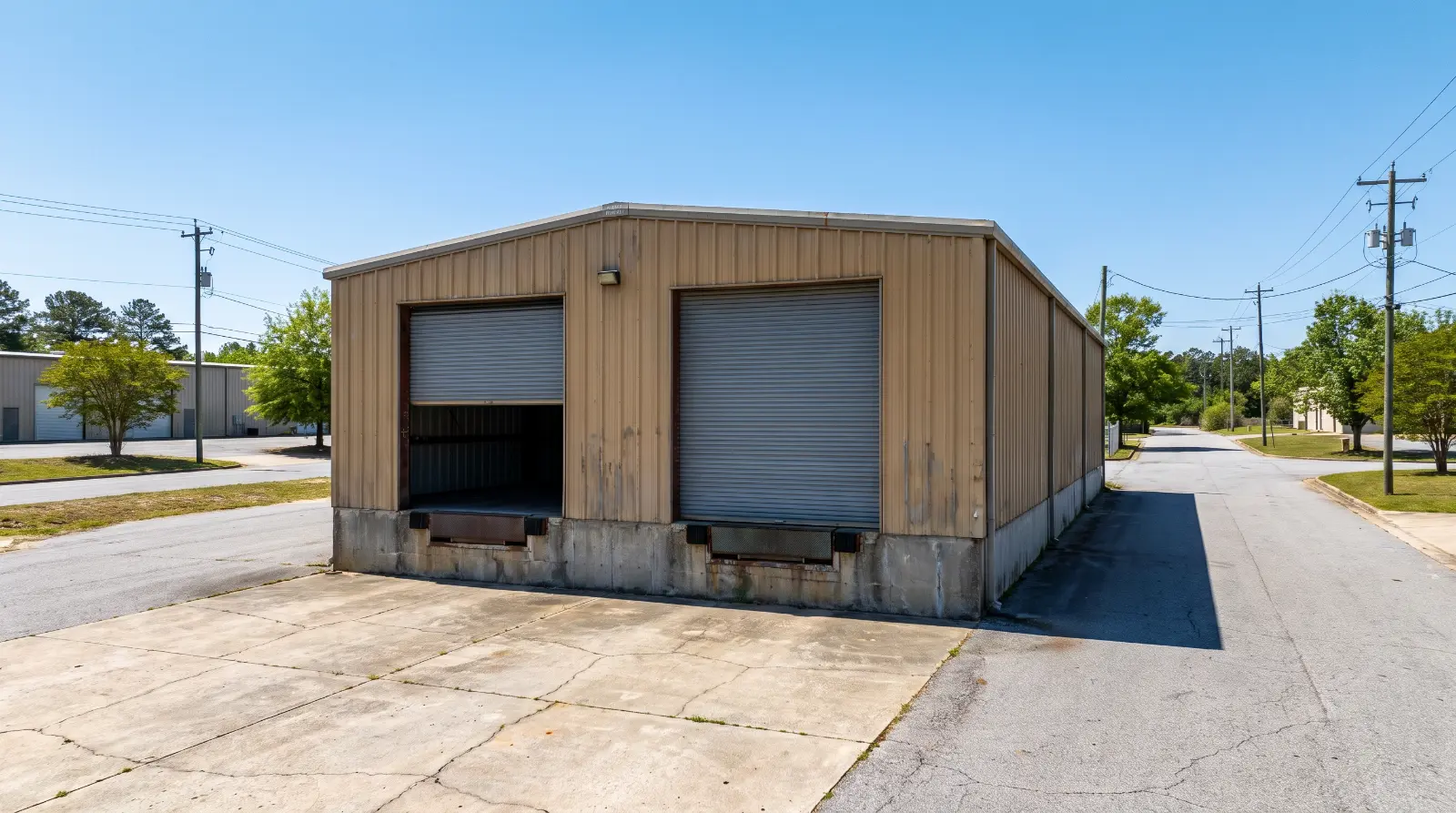
Commercial doors work harder than home doors. A shop or warehouse door can open and close dozens of times a day, take bumps from forklifts and trailers, and sit exposed to wind and weather on open lots. When one fails, it can stop deliveries, lock in equipment or leave a building unsecured.
Safety: commercial door springs are bigger and stronger than residential ones. Don't try to adjust springs, cables or the barrel of a rolling door yourself. Keep people and vehicles clear of a door that's stuck partway.
Common door types
- Rolling steel doors: slats that coil around a barrel above the opening. Common on storage units, shops, loading areas and storefront security doors.
- Commercial sectional doors: large versions of residential doors, often insulated, sometimes with full-view glass. Common on auto shops and service bays.
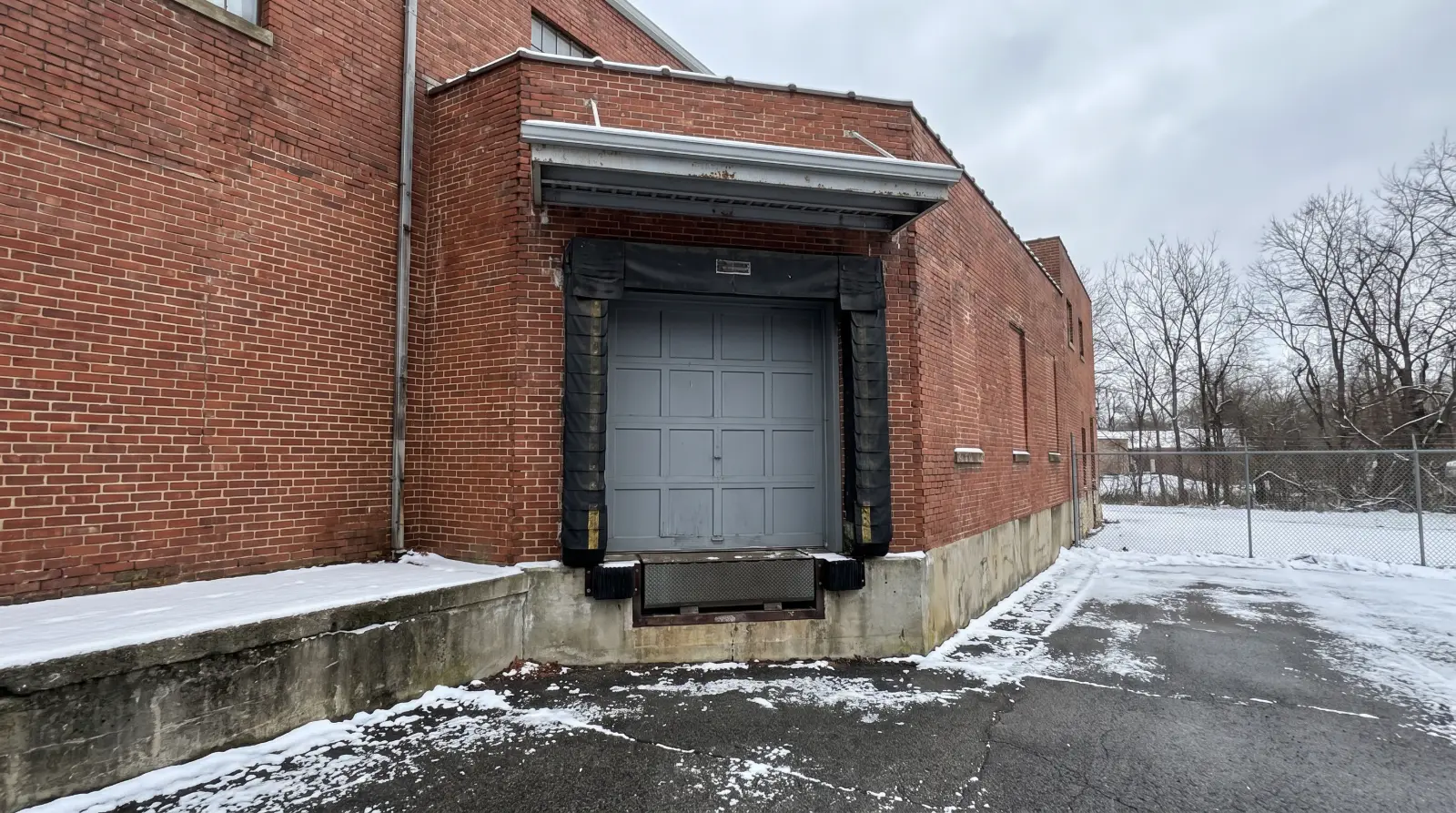
- Dock doors: sectional or rolling doors at loading docks, usually with dock seals or shelters around them.
- High-cycle doors: built with heavier springs and hardware for doors that run all day.
- Farm and pole-barn doors: tall overhead doors on outbuildings, common around Buckner, Sibley, Oak Grove and Lone Jack.
What usually goes wrong
| Problem | Typical cause |
|---|---|
| Door won't lift, or lifts crooked | Broken spring, cable off the drum, or a bent guide |
| Rolling door jams partway | Bent slats, a damaged bottom bar, or debris in the guides |
| Operator runs but door doesn't move | Disengaged operator, worn drive chain, or a broken spring |
| Door hit by a vehicle | Bent tracks, guides, sections or slats |
| Dock seal torn, gaps at the trailer | Worn or damaged dock seals or shelters |
| Door slow or noisy | Dry bearings, worn rollers, or an operator that needs service |
Shop or warehouse door down?We'll try to connect you with an independent garage door company that works your ZIP code.
Call (816) 422-DOORWhat to tell the company when you call
- The type of door (rolling steel, sectional, dock) and roughly how big it is
- Whether it's stuck open, closed or partway, and whether the building is secure
- What happened: a bang, a vehicle hit, wind, or a gradual problem
- Whether it's manual, chain hoist or motor operated, and the operator brand if visible
- How often the door is used, and any access details like gate codes or hours
Storm damage on commercial doors
Wide commercial doors catch a lot of wind. After a strong storm, check whether the door is bowed, whether the guides or tracks are bent, and whether the bottom bar still meets the floor evenly. Hail can dent rolling door slats and break glass in full-view doors. The storm damage guide covers what to photograph for insurance.
Choosing a commercial door company
Ask the same questions you'd ask for a home door (the FAQ covers the basics), plus whether they service your specific door type, whether they offer planned maintenance, and how they handle after-hours lockups. Our hiring checklist has the full list.
Commercial door questions
Do the same companies handle home and commercial doors?
Some do both, others focus on one. When you call, say it's a commercial or shop door and describe the type and size so the call reaches someone who works on that kind of door.
What's the difference between a rolling steel door and a sectional door?
A rolling steel door is made of interlocking slats that coil around a drum above the opening. A sectional door is made of hinged panels that roll back along tracks under the ceiling, like a large residential door.
How often should commercial doors be serviced?
Doors that cycle many times a day benefit from regular inspection and lubrication. Ask the company what schedule they suggest for how often your door runs.