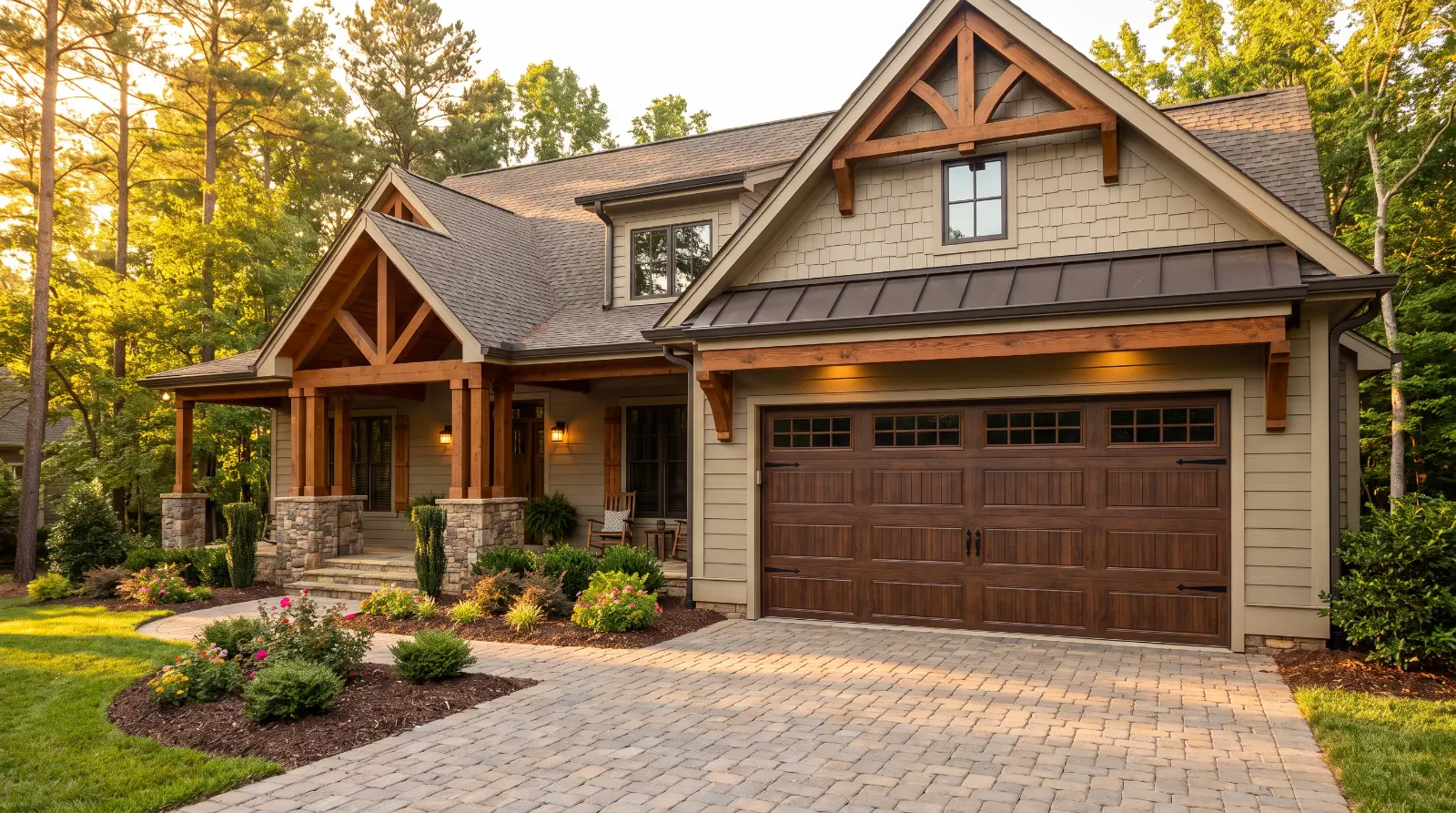
A garage door is often the biggest single feature on the front of a house. Replacing it changes how the house looks from the street, how loud the garage is, how warm or hot an attached garage gets, and how well the door holds up to the next hailstorm. It's worth a little research before you pick one.
Door materials
| Material | Good to know |
|---|---|
| Single-layer steel | Light and simple. Dents more easily in hail and offers little insulation. Fine for a detached garage you don't heat. |
| Insulated steel (two or three layer) | Steel on the outside with insulation behind it, often steel on both sides. Quieter, more rigid and better at resisting dents. The most common choice for attached garages. |
| Wood | Looks right on some older Independence homes and historic streets. Heavy, and needs regular finishing to avoid rot. |
| Composite or faux wood | Wood look with less upkeep. Weight and dent resistance vary by product. |
| Aluminum and glass | Modern look, lots of light. Less insulation and less dent resistance. |
Insulation and R-value
Doors are often labeled with an R-value. Higher numbers insulate better. For an attached garage, especially one with a bedroom above or beside it, an insulated door makes a noticeable difference through a Kansas City July and a January cold snap. It also tends to be quieter and stiffer, which helps the door run smoothly.
Built for Missouri storms
- Hail: thicker steel and steel on both sides resist dents. Ask about the steel gauge (lower numbers are thicker).
- Wind: wind-rated doors use heavier struts and reinforced hardware. Worth asking about if your garage faces open ground, as many do in Oak Grove, Lone Jack and the rural edges of the county.
- Windows: top-section windows look great but are the first thing hail breaks. Some doors offer impact-resistant glazing.
Thinking about a new door?We'll try to connect you with an independent garage door company that works your ZIP code.
Call (816) 422-DOORStyle and the street
Raised-panel steel doors suit most postwar ranches. Carriage-house doors with decorative hardware are popular in newer Lee's Summit, Raymore and Blue Springs subdivisions. On older homes near Independence's historic districts, a simple wood or wood-look door often fits best. If you're in a neighborhood with a homeowners association, check its rules on color and style before ordering.
What happens on installation day
- The installer releases the old springs safely and removes the old door, tracks and springs
- Checks the opening and framing, and repairs or adds jamb material if needed
- Installs the new tracks, sections, rollers, cables and springs sized to the new door
- Balances the door and adjusts it to close evenly against the floor
- Connects and adjusts the opener (existing or new) and tests the safety reverse
- Hauls away the old door, if that's included
What to ask before you order
- What's the door's insulation rating, steel gauge and wind rating?
- Does the warranty cover the sections, the hardware and the labor separately?
- Will my opener work with this door, or should it be replaced?
- Do I need low-headroom track for my ceiling?
- Does the job need a city permit where I live, and who handles it?
- How long will the door take to arrive?
Still deciding whether you need a new door at all? Start with repair or replace. For shop, barn or warehouse openings, see commercial and shop doors.
Installation questions
How long does it take to install a new garage door?
A standard residential door often takes around half a day once the door is on site. Odd-size openings, new framing, low-headroom track or a new opener at the same time can add time. Ordered doors can take some time to arrive, so ask about lead time.
Do I need a new opener with a new door?
Not always. If the opener is in good shape and suited to the new door's weight, it can often stay. Heavier insulated or wood doors may need a stronger opener. Ask the installer.
What's the best door for hail?
No door is hail-proof, but insulated doors with steel skins on both sides, and thicker gauge steel, hold up better than thin single-layer steel. Some composite and fiberglass doors resist denting too.