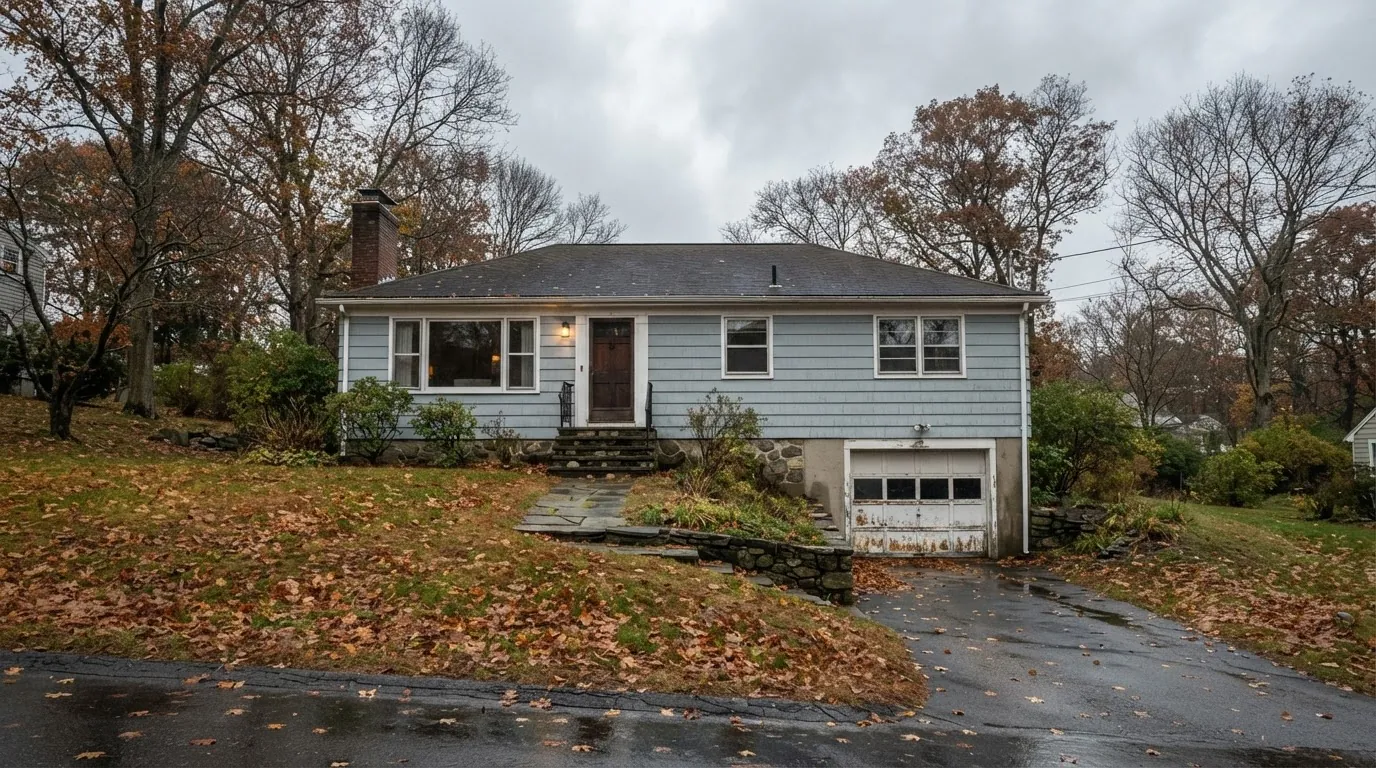
Western Missouri sits in one of the busier severe-weather corners of the country. From roughly March through June, thunderstorms roll across the Kansas City area with hail, gusty straight-line winds and the occasional tornado warning. A garage door is the largest moving thing on most houses, and it's usually made of fairly thin steel. That makes it one of the first things to show storm damage.
Safety first: if lines are down, the garage is flooded, or part of the house is damaged, deal with that before the door. Don't run the opener on a door that's bowed, crooked or off its tracks.
What to check once the storm passes
- From the driveway: Is the door flat, or bowed inward? Is it level, and is the bottom seal touching the ground evenly?
- The panels: Look for round dents from hail, creases from flying debris, and cracked or broken windows in the top section.
- From inside, with the lights on: Are the tracks straight and still bolted to the wall? Are any rollers out of the track? Are the cables tight on both sides?
- The struts and hinges: Bent horizontal struts or cracked hinges usually mean wind pushed the door hard.
- The opener: After an outage, check whether the door is still attached to the opener and whether remotes and keypads still work.
Hail dents: cosmetic or more than that?
Small round dents across a steel door are mostly cosmetic. The door still works, it just looks rough. Deeper dents can crack the paint, which lets rust start, and dents along the edges of a section can interfere with how the sections fold over each other as the door rolls up. If the door now scrapes, sticks or makes a new noise, the damage is more than skin deep.
Insulated doors with a steel skin on both sides tend to resist dents better than single-layer steel doors. Thicker gauge steel helps too. If you're replacing a door that's been hailed on more than once, ask about both.
Wind damage: the one to take seriously
Strong wind can push a closed door inward. Even if it springs back, the tracks may be bent, the hinges cracked and the cables strained. A door that's been pushed in should be looked at before it's used again. This is the same territory as a door that has come off its track, and our cables and tracks guide explains why that's dangerous to handle yourself.
Storm hit your garage door?We'll try to connect you with an independent garage door company that works your ZIP code.
Call (816) 422-DOORPhotos for your insurance company
If you plan to file a claim, document the damage before anything is fixed:
- Wide shots of the whole door from the driveway, plus the house around it
- Close-ups of dents with a coin or tape measure for scale
- Photos from inside of any bent tracks, struts or hinges
- The date of the storm. Local news and the National Weather Service keep storm reports
Then call your insurer to ask how they want to proceed. A garage door company can usually describe the damage in writing and tell you whether sections can be replaced or the door needs replacing. Make sure the company you hire is local and checks out. Storm seasons tend to bring out-of-town contractors knocking on doors. Our page on hiring a garage door company has the questions to ask.
Repair sections or replace the door?
Replacing one or two sections can work well on a newer door where matching sections are still made. On an older or discontinued door, or one with damage on most sections, a full replacement often makes more sense. The repair or replace guide goes through the signs, and the new door page covers choosing a sturdier door.
Power outages and openers
Storms that knock out power can leave you with a closed door and a car inside. Every opener has a red release cord to disconnect the door so it can be lifted by hand, but only use it if the door is closed and the springs are intact. Afterward, re-pair remotes and reconnect wifi openers. If outages are common on your street, ask about an opener with battery backup. See opener repair.
Storm damage questions
Will homeowners insurance cover hail damage to my garage door?
Often, a garage door attached to the house is treated like the rest of the house under a homeowners policy, subject to your deductible. Policies vary, and purely cosmetic dents may be handled differently. Call your insurer or agent to ask, and take photos before anything is repaired.
Can a single dented panel be replaced?
Sometimes. It depends on whether the same section is still made for your door model and color, and how old the door is. Older or discontinued doors may not have matching sections, and a new section next to faded old ones can look mismatched.
My door was pushed in by the wind. Can I still use it?
Not until it's checked. A door bowed by wind often has bent tracks, damaged hinges or strained cables. Running the opener can make it worse or bring the door down. Leave it closed if you can and call for help.
Should I get a wind-rated garage door?
If your home faces open ground or has had wind damage before, it's worth asking about. Wind-rated and reinforced doors use heavier struts and hardware. A garage door company can tell you what's available for your opening size.